So I found a great article on Green Cosmetics that includes a Dirty Dozen Chemicals to avoid and wanted to share. I found it on a new awesome Green site I plan to thoroughly search and use to share lots of info (
http://www.thegreenguide.com/).
In the meantime, enjoy:
The Dirty Dozen Chemicals in Cosmeticsby Catherine
ZandonellaSeptember 18, 2007
Beauty is only skin deep, but the products we use to attain it contain chemicals that may penetrate far deeper. The average adult uses nine personal care products a day, with roughly 120 chemicals spread among them, many of which are incompletely tested for toxicity.
Below we've listed 12 chemicals that are best avoided. A single exposure to any of them is unlikely to cause harm, but daily exposure over a lifetime may add up. When shopping, be prepared to spend some time reading labels; even brands that advertise themselves as "natural" or "botanical" have been known to include some of these.
1. Antibacterials - Overuse of antibacterials can prevent them from effectively fighting disease-causing germs like E.
coli and Salmonella
enterica.
Triclosan, widely used in soaps, toothpastes and deodorants, has been detected in breast milk, and one recent study found that it interferes with testosterone activity in cells. Numerous studies have found that washing with regular soap and warm water is just as effective at killing germs.
2. Coal Tar - Coal tar is a known human carcinogen used as an active ingredient in dandruff shampoos and anti-itch creams. Coal-tar-based dyes such as FD&C Blue 1, used in toothpastes, and FD&C Green 3, used in mouthwash, have been found to be carcinogenic in animal studies when injected under skin.
3.
Diethanolamine (DEA) - DEA is a possible hormone disruptor, has shown limited evidence of carcinogenicity and depletes the body of choline needed for fetal brain development. DEA can also show up as a contaminant in products containing related chemicals, such as
cocamide DEA.
4. 1,4-
Dioxane - 1,4-
Dioxane is a known animal carcinogen and a possible human carcinogen that can appear as a contaminant in products containing sodium
laureth sulfate and ingredients that include the terms "PEG," "-
xynol," "
ceteareth," "
oleth" and most other
ethoxylated "
eth" ingredients. The FDA monitors products for the contaminant but has not yet recommended an exposure limit. Manufacturers can remove
dioxane through a process called vacuum stripping, but a small amount usually remains. A 2007 survey by the Campaign for Safe Cosmetics found that most children's bath products contain 10 parts per million or less, but an earlier 2001 survey by the FDA found levels in excess of 85 parts per million.
5. Formaldehyde - Formaldehyde has a long list of adverse health effects, including immune-system toxicity, respiratory irritation and cancer in humans. Yet it still turns up in baby bath soap, nail polish, eyelash adhesive and hair dyes as a contaminant or break-down product of
diazolidinyl urea,
imidazolidinyl urea and
quaternium compounds.
6. Fragrance - The catchall term "fragrance" may mask
phthalates, which act as endocrine
disruptors and may cause obesity and reproductive and developmental harm. Avoid
phthalates by selecting essential-oil fragrances instead.
7. Lead and Mercury -
Neurotoxic lead may appear in products as a naturally occurring contaminant of hydrated silica, one of the ingredients in toothpaste, and lead acetate is found in some brands of men's hair dye. Brain-damaging mercury, found in the preservative
thimerosol, is used in some mascaras.
8.
Nanoparticles - Tiny
nanoparticles, which may penetrate the skin and damage brain cells, are appearing in an increasing number of cosmetics and sunscreens. Most problematic are zinc oxide and titanium dioxide
nanoparticles, used in sunscreens to make them transparent. When possible, look for sunscreens containing particles of these ingredients larger than 100 nanometers. You'll most likely need to call companies to confirm sizes, but a few manufacturers have started advertising their lack of
nanoparticle-sized ingredients on labels.
9.
Parabens(methyl-, ethyl-,
propyl-,
butyl-,
isobutyl-) -
Parabens, which have weak
estrogenic effects, are common preservatives that appear in a wide array of toiletries. A study found that
butyl paraben damaged sperm formation in the testes of mice, and a relative, sodium
methylparaben, is banned in cosmetics by the E.U.
Parabens break down in the body into p-
hydroxybenzoic acid, which has
estrogenic activity in human breast-cancer cell cultures.
10. Petroleum Distillates - Possible human carcinogens, petroleum distillates are prohibited or restricted for use in cosmetics in the E.U. but are found in several U.S. brands of mascara, foot-odor powder and other products. Look out for the terms "petroleum" or "liquid paraffin."
11. P-
Phenylenediamine - Commonly found in hair dyes, this chemical can damage the nervous system, cause lung irritation and cause severe allergic reactions. It's also listed as 1,4-
Benzenediamine; p-
Phenyldiamine and 4-
Phenylenediamine.
12.
Hydroquinone - Found in skin lighteners and facial moisturizers,
hydroquinone is
neurotoxic and allergenic, and there's limited evidence that it may cause cancer in lab animals. It may also appear as an impurity not listed on ingredients labels.
What You Can Do
-Complain to your drugstore when you see unhealthy ingredients in their consumer products. They may be unaware.
-Visit
www.safecosmetics.org/companies to find companies that have signed the Compact for Safe Cosmetics, a pledge to remove chemicals linked to cancer, birth defects and other health problems.
-Take action in support of your right to buy safe personal care products at
www.safecosmetics.org/action.
Resources:
Campaign for Safe Cosmetics:
http://www.safecosmetics.org/Skin Deep:
http://www.cosmeticdatabase.com/National Library of Medicine's Household Products Database:
http://www.householdproducts.nlm.nih.gov/
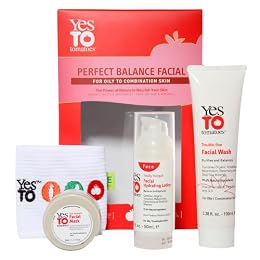 I've been using the products for a little over a week and I've already noticed a nice difference. A lot of my break outs have cleared up and my skin feels much better. It was a little red for a few days, but then again, it was red before using, so it could be the healing. None of the ingredients I've seen to avoid are in here and there are lots of organic ingredients. It has a nice, appealing scent. I especially like the cleanser. The face lotion might not be moisturizing enough for me, although I need to give it more time to determine that for sure. I like the mask as well.


