Natural/Med-Free Birth:
So when I first became pregnant and thought about delivery, I originally thought that the epidural and medicated process sounded fine - everybody was doing it right (are we lemmings here people? I thought we were human...but that's a story for another day), but then thankfully someone enlightened me and turned me onto this wonderful documentary called "The Business

of Being Born." It was eye opening for sure. It details the modern history of childbirth and compares childbirth statistics in the US verses other countries. What amazed me most is in most other countries, births are at home with
doulas or midwives,
unmedicated and natural and with that, they have significantly lower infant mortality and delivery complications. Practices in the US are vastly different with more than 80% of births happening in hospitals. In the US, having a baby has become a business where you are a number to the hospital and the quicker you are in and out the better for their bottom line. Unfortunately this has led to increased use of medications and c-sections. The national c-section rate in the United States is over 30%! All of this for a process that women handled naturally and
unmedicated for centuries on their own because they trusted their bodies and their bodies knew what to do. In studies they've found that natural and
unmedicated births are shorter, babies are healthier, and mothers have much faster healing times.
So my decision was made - I'd rather let my body do what it knows how to do and have a shorter labor. My thought was I'd rather be in a lot of pain for a shorter amount of time and heal faster than have a longer time of muted pain and longer healing times. Plus, many times the medications typically used to 'aid' in labor ultimately feed the c-section cycle. You go in when you are in labor. You ask for/doctors offer an epidural for the pain. The epidural slows down your labor and you are taking too long, so they suggest Pitocin to speed up your contractions - but Pitocin makes the contractions more painful, so you get more pain medication, which slows down labor some more, so more Pitocin is administered. With the stronger contractions the baby is affected more and then all of a sudden you've had a long labor and the baby is stressed and a c-section is recommended. Sound familiar? I'm sure you know at least one women with this story (I know I do!)
So my plan is to go unmedicated. We hired a doula to help me through the process and offer support of unmedicated pain relief techniques such as changing position, massage, and breathing techniques. I feel confident that this will help me through my labor and I'll be very happy with the results, but only time will tell.
What is a Doula?
A Doula (from the ancient Greek meaning "a woman who serves") is a trained and experienced professional who provides continuous physical, emotional and informational support to the mother before, during and just after birth; or who provides emotional and practical support during the postpartum period.
A Doula understand and trusts the natural process of birth, respects its transcendent and sacred aspects as well as its physical and emotional aspects.
A Doula facilitates the birth experience for the parents, the baby and the primary care providers. Benefits of having a birth doula:
50% reduction in the cesarean rate
25% shorter labor
60% reduction in epidural requests
40% reduction in pitocin use
30% reduction in analgesia use
40% reduction in forceps delivery
Parents who have hired a Postpartum doula:
feel more secure and cared for
are more successful in adapting to new family dynamics
have greater success with breastfeeding
have greater self-confidence
have less postpartum depression
have lower incidence of abuse
Breastfeeding:
I've also decided that I want to breastfeed. It's funny how taboo breastfeeding seems to be in society today. We see all sorts of news reports about how offended people get by this when a woman breastfeeds in public, which I find utterly insane! Do people not realize that for centuries that was the only option available to mothers? Formula is a new 'convenience' product that is not only expensive, but not custom manufactured for each baby. Besides that, can one of these people please give me an example of any other living species that provides for its young that uses food that is synthetically produced? No! We are the only species that does this!
According to
http://www.whattoexpect.com/,
"It's not false advertising to say that mother's milk is nature's perfect food — and it's no overstatement either. Just as cow's milk is the ideal food for calves and goat's milk the best supper for kids (of the
goatish variety), your breast milk is exquisitely tailored to meet the nutritional needs of a newborn human. Human breast milk contains at least 100 ingredients that can't be found in cow's milk and that formula manufacturers have yet to duplicate. It's easy on your baby's delicate tummy, too — breastfed babies' dirty diapers are notoriously less nasty than those of their formula-fed nursery mates (and nursed newborns suffer far less frequently from constipation and almost never from diarrhea). Some babies might be allergic to cow's milk (or soy alternatives), but the odds are slim that your baby's body will object to anything about your milk (except not being able to get to it fast enough)."
There are also a ton of health benefits that come for both mother and baby because of breastfeeding. Benefits for baby include protection from infection (less likely to have ear infections, respiratory tract
infections, urinary tract infections and other illnesses because their immune system is helped via antibodies and other factors from mom passed on via the milk), no bacteria (breast milk is sterile and requires no boiling), lower risk of excess weight and obesity, brainier babies (studies show a slight but statistically
significant increase in the IQ of babies who are breastfed verses those who are formula fed, possibly due to the increased
DHA and extra skin to skin contact with mom), stronger jaws with well developed teeth and palates and fewer cavities later in life (babies have to work extra hard for their breakfast verses being fed from rubber and silicone nipples), and better eating habits (babies get a taste of what mom is eating through the flavor of the milk and this early exposure makes them more open to the tastes later on). New reports also suggest that breastfeeding reduces your
child's risk of SIDS.
For mom, there are also healthy side effects of breastfeeding your baby: quicker weight loss (you burn extra calories to produce milk and as baby feeds it triggers the release of oxytocin which helps shrink your uterus), lower risk of uterine and breast cancer, lower risk of bone loss after menopause, and natural birth control (periods are slower to return, although you shouldn't rely solely on this as birth control).
In addition to the health benefits, breastfeed is also essentially free. No formula to buy, no bottles necessary unless you are planning to pump. I've seen the cost savings estimates range from just under $1,000 to over $3,000 depending on the formula type you would have other wise fed and other supplies necessary. Even if you include the costs of nursing supplies (bras, pumps, etc.), you still realize savings.
Also, breastfeeding is convenient and time saving. No going and finding formula, mixing and measuring, warming up, etc. It's an on demand product that is the perfect consistency, mixture, and temperature for your baby. It actually adapts to your babies changing health needs as they grow. This is especially nice for late night feedings - no having to trek around the house to find and prepare formula - simply find baby and feed. Quicker and more convenient for all!
Finally - the diapers are easier to change! Again, from
http://www.whattoexpect.com/,
"Your milk also has a lower protein content, which makes it easier for your baby to digest, and its chief protein (
lactalbumin) is both more nutritious and more readily broken down than the primary protein in cow's milk (
caseinogen).The fats in your milk separate more easily, which is part of the explanation for those sweeter-smelling soiled nappies (as impossible as it may be to believe, the odor really isn't onerous — at least until solids come your baby's way). Finally, unlike formula, which is the same from feeding to feeding and can to can, the milk your body makes will change in composition in response to your baby's needs (and change in taste based on the foods you're eating). "
which leads me to...
Cloth Diapering:
Another option that is both eco-friendly and offers cost savings is cloth diapering. This is another item that seems to be so taboo in social circles. Gone are the crazy cloth diapers from our parents time that require pins and vinyl covers and lots of leaking. Today there are so many more options that either are just as convenient as disposables (further called sposies), but in many cases can be more convenient that sposies.
From
http://www.surebaby.com/, "If you plan to use disposable diapers, plan on spending between $1,600-$2,300 by the time your baby is potty-trained. Expect your baby to go through
at least 7-8 diapers a day on average and spending $80-$130 a month on diapers alone (especially in the first few months, when changes are more frequent.) Cloth diapering can be just as expensive as disposables if you use a diaper service. If you launder them yourself, you can save money. It is estimated that cloth diapering cost approximately $800-$1,100 by the time your baby is potty-trained (without the diaper service.)" This means that for your first baby, you can save anywhere from $800 or more. The wonderful things about cloth diapers not mentioned in this article is that they can be reused for future babies, significantly increasing your costs savings. For those who only have one, don't fret - you can actually sell your diapers when done with them for a pretty penny - adding more to your savings.
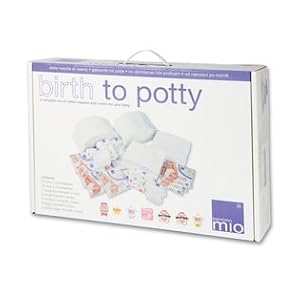
I actually will probably come in significantly under that $800 range since I scored on my set. I bought the
Bambino Mio birth to potty kit. Normally selling for $499, I got the entire kit for $249 as a close out from a local retailer. As is, it contained all of the diapers I'd need to diaper baby from birth to potty. I'll likely pick up some more
nappys and liners to avoid doing laundry every two days and hopefully stretch it to 3 or 4 days between washings, but even with that it's a substantial savings and they are cute as hell!
So those are my initial thoughts/suggestions for having a Green Baby and Saving some Green during/after pregnancy.
Enjoy!
And...hopefully we'll meet Baby Grasso soon...

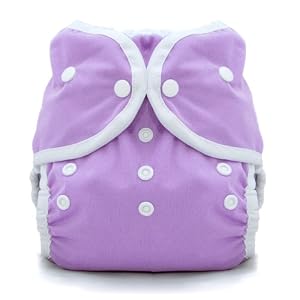 2. Cloth Diapering - I could have gone 100% cloth, but we didn't - I was scared in the beginning and didn't start CDing until G was 2 months old. Since then, she's in cloth the majority of the time - except when she had a yeast infection or when people watch her who aren't comfortable with the cloth diapers or we're on vacation without a washer. I love cloth diapering and I'm mad at myself for being scared at first. Her fluffy bum is adorable to me and I love that we aren't contributing to all the extra waste in landfills. I honestly don't mind doing the diaper laundry every 2 - 3 days. Plus, I can't even begin to imagine how much money we've saved. Plus, I'm going this weekend to try and sell some of my stash - stuff I don't use or isn't my style. You can't resell a disposable diaper now can you? Total investment I might have $400 in diapers, if that. I fully expect I could sell what I have now for between $300 and $400. Plus, what I have now could be reused if we have another and I won't need to buy any more diapers - unless I see more cute covers that I must have. My favorite prefold covers are Thirsties & Blueberry.
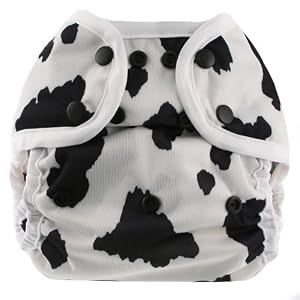 Dammit if that Blueberry cow print diaper isn't the most adorable thing ever - I love it so much I have two of those. I own the Thirsties cover in purple, orange, and pink. I also have a few other covers, but these are for sure my favorite go to choices. I've seen varying amounts of estimates, but the range seems to be that cloth diapering saves people about $800 - $3000 in the first year. Yay!